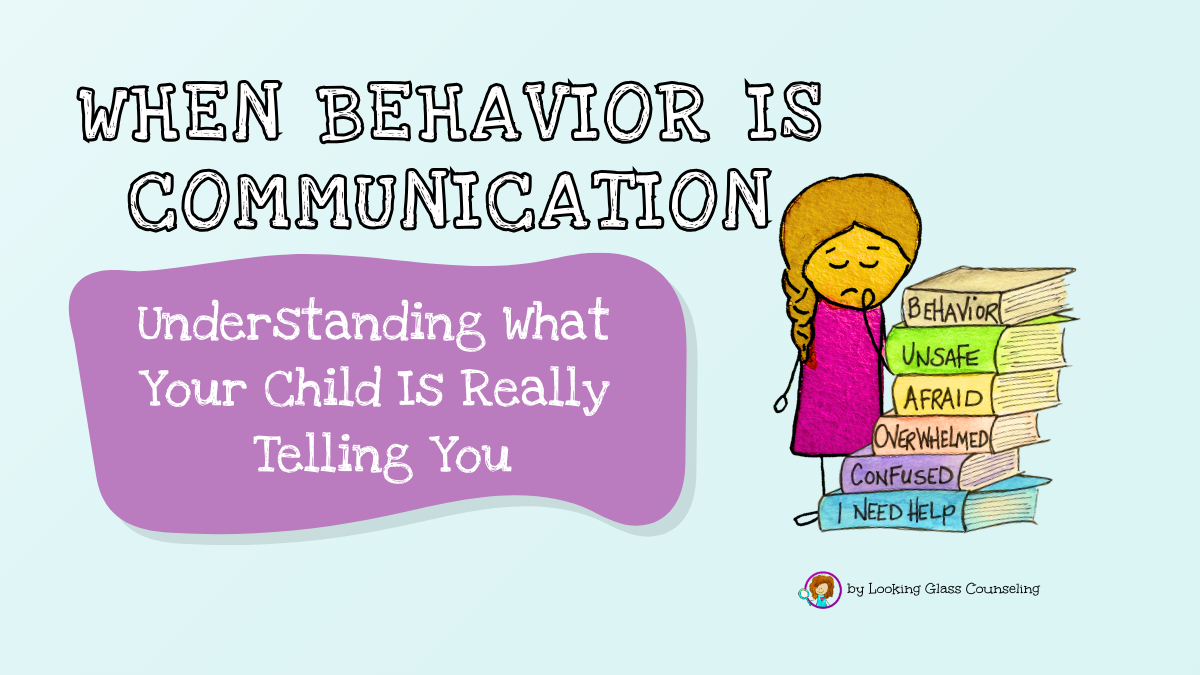
When Behavior Is Communication: Understanding What Your Child Is Really Telling You
When “Why?” Isn’t the Right First Question
Have you ever reacted to something and only later realized you weren’t as calm or logical as you thought?
Maybe your tone sharpened.
Maybe you shut down.
Maybe you said something you didn’t mean.
In that moment, if someone had asked you, “Why did you do that?”,
you might not have had a clear answer.
This isn’t just a kid thing.
It’s a human thing.
And yet, when behavior shows up in children, “why?” is often the very first question we ask.
After more than three decades of working with kids — in schools, homes, and counseling spaces — this is the question I’ve heard more than any other when behavior surfaces.
➺ Why did you do that?
➺ Why didn’t you do your work?
➺ Why are you failing?
➺ Why did you steal?
➺ Why did you cheat?
➺ Why didn’t you try?
I’ve sat in countless disciplinary meetings where this question gets asked over and over — sometimes louder, sometimes more urgently — as if the right tone might finally unlock the answer.
And almost every time, the response is the same:
“I don’t know.”
Adults often hear “I don’t know” and immediately label it. Avoidance. Dishonesty. Attitude.
But here’s the truth:
Most kids genuinely don’t know.
And many adults don’t either when they’re overwhelmed.
What’s Actually Happening
When a situation feels tense, our body reacts before our thinking does.
This doesn’t only happen in schools. It happens in kitchens. In cars. In living rooms. In staff meetings. In marriages. Anywhere someone feels exposed, criticized, or afraid of getting it wrong.
Whether it’s being sent to the principal’s office
or being called into the kitchen after breaking a rule at home,
the body often hears one message:
I’m in trouble.
In that moment, the heart beats faster.
The stomach tightens.
The mind races — or goes blank.
This isn’t defiance.
It isn’t manipulation.
It’s protection.
When we feel embarrassed, ashamed, or afraid of consequences, our system shifts into self-preservation. And when that happens, clear thinking becomes harder to access.
That’s true for children.
And it’s true for adults.
The part of the brain responsible for reasoning and reflection goes quieter under stress. So, when we ask “Why?” in the heat of the moment, we’re often asking for a level of self-awareness that simply isn’t available yet.
Think about the last time you felt criticized or caught off guard.
Did you immediately respond with calm logic and deep self-reflection?
Or did you feel your body tense, your thoughts scramble, or your words come out sharper than you intended?
That’s the same process.
That’s how stress works — for adults and for kids.
That doesn’t mean there isn’t a reason.
It means the reason is there — but it’s buried beneath emotions that have taken over.
Behavior Is Communication
Decades of research tell us that behavior serves a purpose. It communicates a need, a feeling, or an attempt to solve a problem.
The action that led to the office — or the argument at home — was communication. It may have been messy, impulsive, or poorly timed, but it was still an attempt to meet some need.
When a child shrugs, shuts down, argues back, or says “I don’t know” — that’s a type of communication too.
“I’m scared.”
“I’m embarrassed.”
“I’m hurt.”
“I don’t want to disappoint you.”
“This feels too hard.”
“I’m overwhelmed.”
“I don’t know how to ask for help.”
If we’re honest, adults communicate this way too.
We snap.
We withdraw.
We over-explain.
We avoid.
We blame.
Behavior is often the symptom of something going on inside of us.
This Is a Skill to Be Learned
We sometimes ask children to make sense of their behavior when many adults haven’t learned how to do this for themselves.
Connecting thoughts to feelings.
Connecting feelings to actions.
Noticing what’s happening inside before acting it out.
These are skills.
And like any skill, they must be taught. Practiced. Modeled. Strengthened over time.
Taking the time to pause and ask ourselves:
➺ What am I feeling right now?
➺ What is this behavior trying to accomplish?
➺ What do I actually need?
That’s where the growth happens.
That’s where the magic is.
Because once we can identify the need underneath the behavior, we gain choice.
We can respond to the need instead of acting it out.
Why “Why?” Often Backfires
When children are repeatedly asked why without support, a few predictable things tend to happen:
➺ They shut down.
➺ They become defensive.
➺ They feel shame.
➺ They learn that being honest feels unsafe.
We might see a child do what we ask in the moment, but they aren’t learning why their behavior matters or what’s really going on inside them.
Without that understanding, real growth and lasting change are hard to achieve.
The behavior might stop in the moment, but when the underlying need isn’t identified and understood, it doesn’t just go away.
It simply finds another way to show up.
The same is true for adults.
What Actually Helps
If we want access to the “why,” we have to first create enough safety for the body to settle.
When the body feels safe again, thinking returns.
Words return.
Ownership of the behavior becomes possible.
Instead of immediately demanding answers, we slow things down and get curious.
With children, we might ask:
➺ What was happening right before this?
➺ What did that moment feel like for you?
➺ What were you hoping would happen?
➺ What were you trying to avoid?
And as adults, we can ask ourselves the same questions.
Awareness before accountability.
When children learn to notice what’s happening inside them, they gain more choice in how they respond.
When adults learn and model this process, they teach it without lecturing — and we all know how quickly kids, especially teens, stop listening when a lecture begins.
The Goal Isn’t Excuses — It’s Growth
Understanding behavior isn’t about letting anyone off the hook.
It’s about helping all of us:
➺ Recognize what’s driving our actions, moving us from reacting to responding
➺ Learn skills we may not yet have
➺ Take responsibility without drowning in shame
➺ Make different choices next time — on purpose
Growth doesn’t happen through pressure.
It doesn’t happen through fear.
It doesn’t happen through intimidation.
It happens when we shine a light on what’s underneath the behavior, acknowledge what it’s communicating, and learn how to respond to the need instead of acting it out.
The ability to connect thoughts, feelings, and actions isn’t automatic—even though it can seem that way because reactions happen so quickly.
Learning to notice the “alarms” going off inside us is a skill that has to be taught and practiced.
This connection is what makes real accountability possible—for children and for all of us.
Final Note for Parents
The most powerful tool for supporting your child’s growth isn’t something you teach—it’s something you practice.
REFLECTION: Where in your life do reactions come faster than reflection?
What underlying need, feeling, or belief might be driving that behavior?
This reflection isn’t about doing it “right.” It’s about being willing to notice your own thoughts and feelings, pause instead of reacting, and model the self-awareness skills you want your child to develop.
Children learn best when the adults around them are learning too. Our own openness to reflection and growth gives kids a living example of how to pause, understand themselves, and make thoughtful choices.
You don’t need to have it all figured out. Many adults were never taught to connect thoughts, feelings, and actions. What matters most is a willingness to notice, reflect, and grow—because that sets the stage for your child to do the same.